

What’s the typical timeline from order to onsite assembly for a customized Duo'ebao EPS dome?
The typical timeline from confirmed order to onsite assembly of a customized Duo'ebao EPS dome is 8–14 weeks. This includes design finalization, module production, quality inspection, packaging, international logistics (if applicable), and on-site setup support coordination.
This timeline matters because it directly affects project scheduling, site preparation, budgeting, and seasonal constraints—especially for outdoor or remote deployments. The most critical factor to verify first is whether your local building regulations require pre-approval of structural or insulation specifications before production begins.
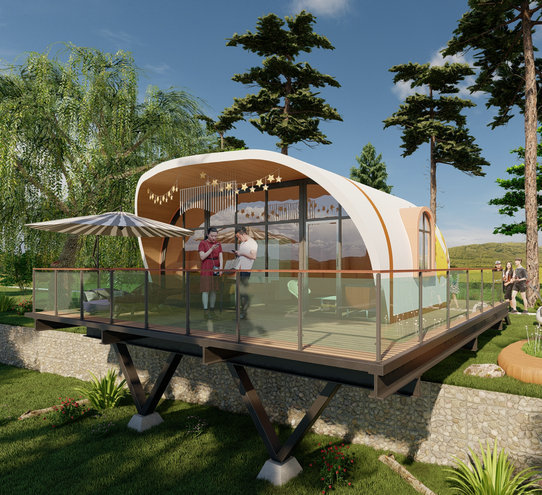
Why does design finalization take up to 2 weeks?
Design finalization typically takes 5–10 working days for standard configurations, and up to 2 weeks for fully customized layouts involving non-standard dimensions, door/window placements, or integration with existing infrastructure.
This step requires mutual alignment on module count (always in multiples of 12), roof curvature radius, foundation interface details, and utility entry points. It is not just drafting—it confirms constructability using the fixed 18cm-thick EPS module system.
Delays most commonly occur when clients request changes after initial approval, or when local soil or climate data isn’t provided early enough to confirm foundation recommendations.
What drives the 6–8 week production window?
Production takes 6–8 weeks because each of the 12 numbered EPS modules must be individually foamed and molded using hot steam, then cured, inspected, and surface-prepared for plaster application.
This process is batch-based and cannot be meaningfully accelerated without compromising dimensional stability or flame-retardant B1 classification. The 18cm thickness and graphite-modified EPS formulation require precise thermal control during expansion and cooling.
If your project falls outside standard export destinations (e.g., Cyprus, Thailand, Sweden), customs documentation and port handling may add 3–5 business days—not included in the core production window but factored into total lead time.
When does logistics timing become unpredictable?
Logistics timing becomes unpredictable when shipping to locations without direct container terminal access, or where import clearance for prefabricated building components lacks established precedent.
Sea freight from China to major ports like Piraeus, Vancouver, or Bangkok typically takes 25–38 days. But inland delivery—especially to mountainous, island, or desert sites—can add 1–3 weeks depending on road conditions, bridge weight limits, and local transport licensing.
For projects in Türkiye, Bulgaria, or Cambodia, Duo'ebao has documented coordination with regional logistics partners; for newer markets, clients should allow buffer time for route validation before committing to hard deadlines.
What determines how fast onsite assembly happens?
Onsite assembly of a completed Duo'ebao EPS dome typically takes 3–7 days with a 4-person crew, assuming level ground, pre-installed foundation, and clear weather.
Assembly speed depends less on labor skill and more on readiness: foundation curing status, crane or lifting equipment availability, and whether mortar mixing and mesh installation are scheduled in parallel. No welding or heavy machinery is required—the modules interlock like large building blocks.
Weather delays are the single largest cause of onsite schedule slippage. Rain within 48 hours of exterior plaster application can compromise adhesion, especially in high-humidity regions like southern Japan or coastal Thailand.
Which factors most commonly extend the overall timeline?
The highest-leverage action to avoid delay is confirming regulatory acceptance of the B1 flame-retardant, 0.03 W/mK insulation coefficient before placing the order—especially if local energy codes reference EN ISO 10456 or ASTM C518 equivalents.
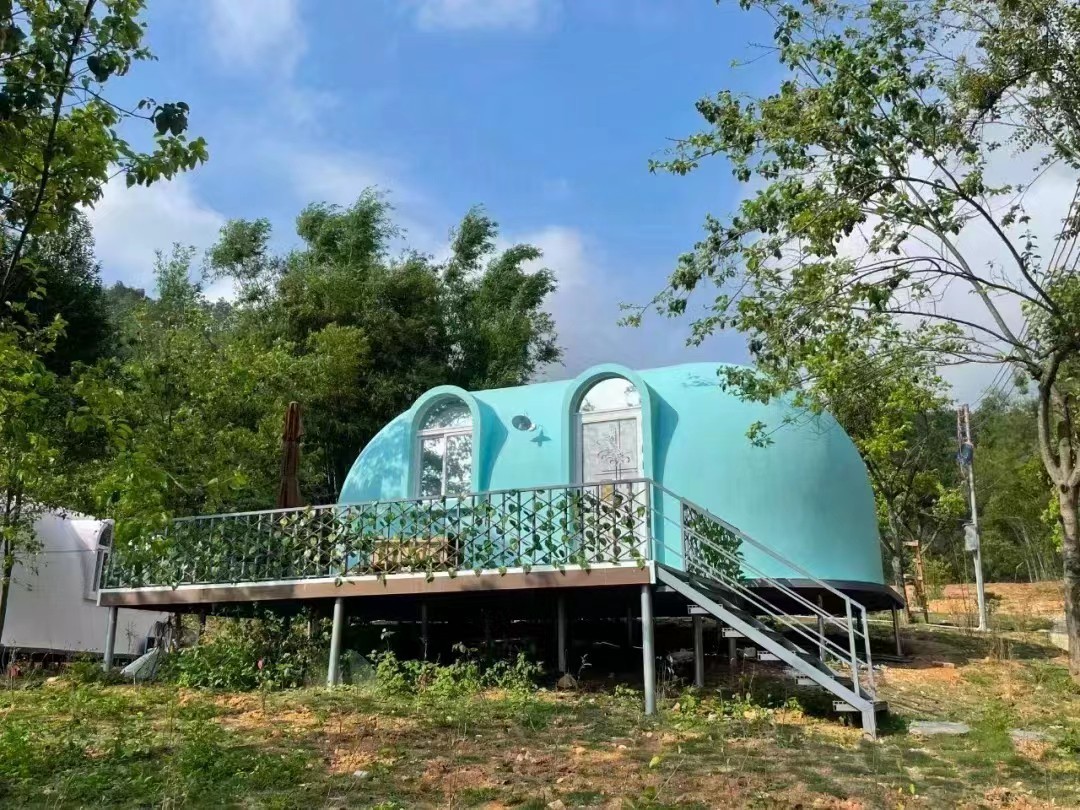
How do certification and compliance affect scheduling?
Certifications like CE, SGS, and MSDS confirm material safety and performance benchmarks—but they do not automatically guarantee local regulatory acceptance. Their value lies in accelerating technical review, not eliminating it.
For example, CE marking supports conformity assessment under EU Construction Products Regulation—but Greece or Cyprus authorities still require site-specific static calculations and fire compartmentation plans. Similarly, SGS test reports help Turkish municipalities evaluate thermal performance, but do not replace their mandatory engineering sign-off.
Projects in Canada or Japan often require additional third-party verification against national standards (e.g., CSA A123.1 or JIS A 5905), which adds 1–2 weeks if initiated only after production starts.
Key decision checklist before placing an order
- If your site lacks an approved foundation design matching the 12-module layout, do not proceed to production—foundation mismatch is the top cause of onsite rework.
- If local building departments have not yet reviewed or accepted EPS dome structural documentation, pause ordering until written confirmation is obtained.
- If your deployment window is narrower than 10 weeks, assess whether partial customization (e.g., standard dome + custom interior layout) could compress the timeline without compromising function.
- If transport to site involves narrow roads, low bridges, or unpaved terrain, engage a local logistics scout *before* finalizing module packaging dimensions.
- If exterior plaster finish must meet specific aesthetic or durability requirements (e.g., seaside salt resistance), confirm mortar compatibility with Duo'ebao’s polymer anti-cracking plastering mortar during design phase—not after shipment.
Start by sharing your site location, intended use case, and local authority contact with Duo'ebao EPS Dome House’s technical support team—they will provide a timeline validation worksheet aligned with your jurisdiction’s known review patterns.
Leave A Message
CONTACT US
Call Us: +86-188-8888-8888
E-mail: name@email.com
Address: The address of the company is 88 provincial street